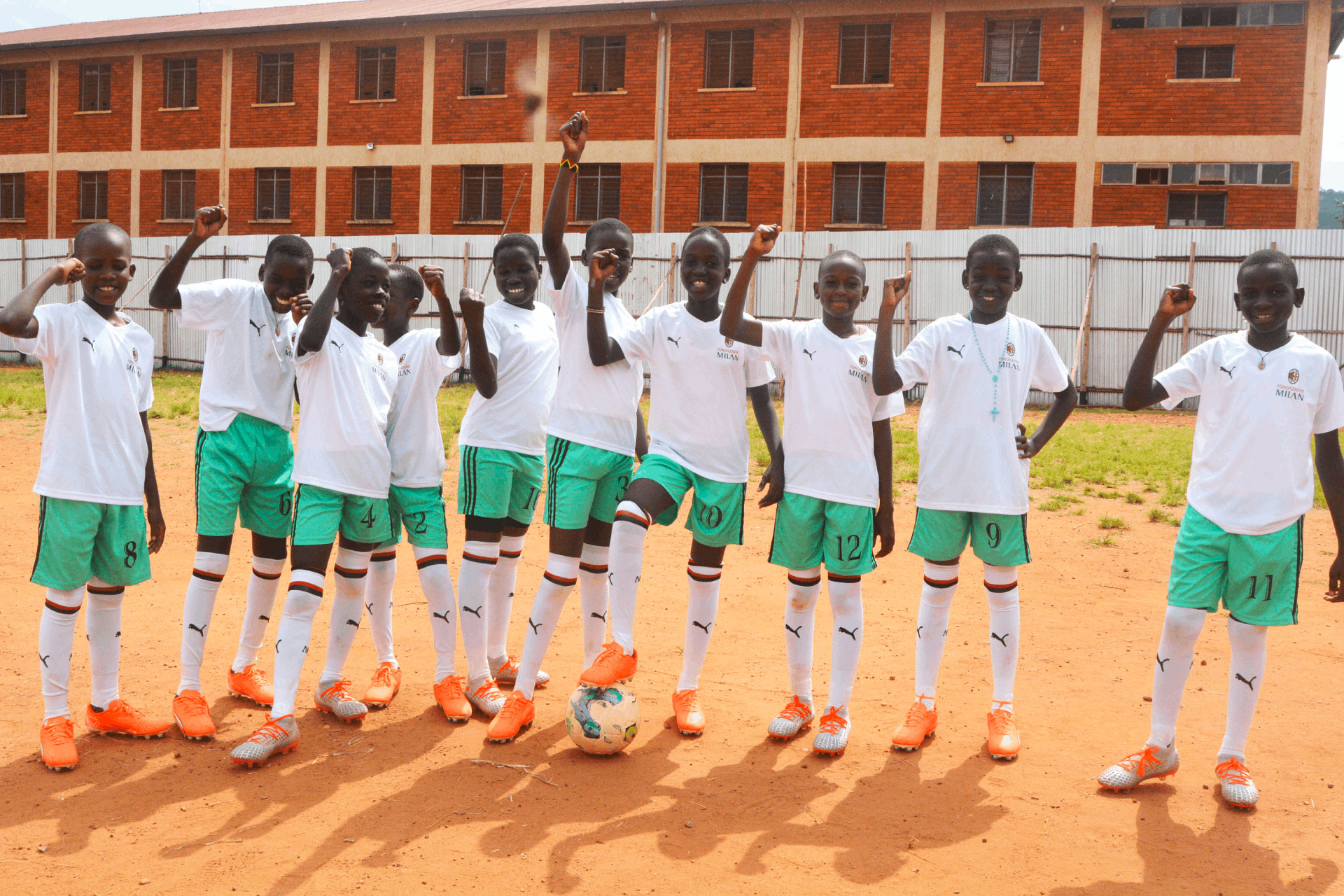
Play can look simple from the outside: children running, building, pretending, competing, negotiating rules or laughing with friends. Yet these moments involve a surprising amount of learning. In primary education, movement and play are not distractions from development. When used well, they are part of development.
Children’s bodies and brains are closely connected. Long periods of sitting can make attention difficult, especially for younger learners. Short movement opportunities can help children reset, manage energy and return to academic tasks with better focus. This does not mean every lesson must become a game. It means a balanced school day should recognise that children need to move.
Physical activity supports coordination, balance, strength and general health. These benefits matter in their own right, but movement can also strengthen classroom readiness. Activities that require listening, stopping, starting, changing direction or following a sequence ask children to control impulses and remember instructions. These are the same kinds of self-management skills that help pupils participate successfully in lessons.
Play also creates social learning. Consider a simple team game. Children have to understand rules, wait for turns, cope with winning and losing, communicate with teammates and sometimes solve disagreements. Adults can teach these skills directly, but play gives children a place to practise them in real time. Over many experiences, pupils learn that cooperation and fairness are actions, not just words.
Unstructured play has a different but equally important role. When children create their own games, they make decisions, negotiate roles and adapt when things change. A stick can become a microphone, a shop counter or part of an imaginary building. This flexible thinking supports creativity because children practise seeing more than one possibility.
Sport can contribute to confidence when the focus is broader than selecting only the most talented players. A child who is not the fastest runner may still become a dependable teammate, learn a new skill or discover that steady practice leads to improvement. Inclusive participation helps children understand that competence can grow over time.
Movement can also support emotional wellbeing. Children experience frustration, excitement, nervousness and disappointment just like adults. Physical activity provides an appropriate way to release energy and can improve mood. In a well-managed school environment, games and movement can become opportunities to learn emotional regulation: how to calm down after losing, how to celebrate without mocking others, and how to try again after a mistake.
There is also value in connecting movement with academic learning. Younger pupils might count jumps, follow directional language, act out vocabulary or move to represent patterns. Older primary learners can use outdoor measurement tasks, relay-style revision or science observations that require movement around a space. These approaches should support the learning objective rather than become entertainment for its own sake.
Safety and structure remain important. Good play spaces need clear expectations, suitable supervision and activities that match children’s ages and abilities. Teachers should watch for exclusion, rough behaviour or repeated conflict. The goal is not simply to “let children run around,” but to create conditions where movement is enjoyable, inclusive and constructive.
Families can support active development at home without expensive equipment. Walking, skipping, simple ball games, household movement challenges and outdoor play can all help. What matters is regularity and the opportunity for children to be active away from screens and chairs.
Adults should also be careful not to treat play as something children earn only after “real work.” That message can unintentionally separate learning from curiosity and movement. A healthier view is that children need different kinds of experiences across the day: focused academic practice, conversation, rest, creativity and active play.
The strongest primary education environments recognise the whole child. Academic progress matters deeply, but children are not only minds sitting at desks. They are developing physically, socially and emotionally at the same time. When schools make thoughtful space for movement and play, they support concentration, wellbeing, confidence, teamwork and resilience—qualities that help children learn inside the classroom and live well beyond it.